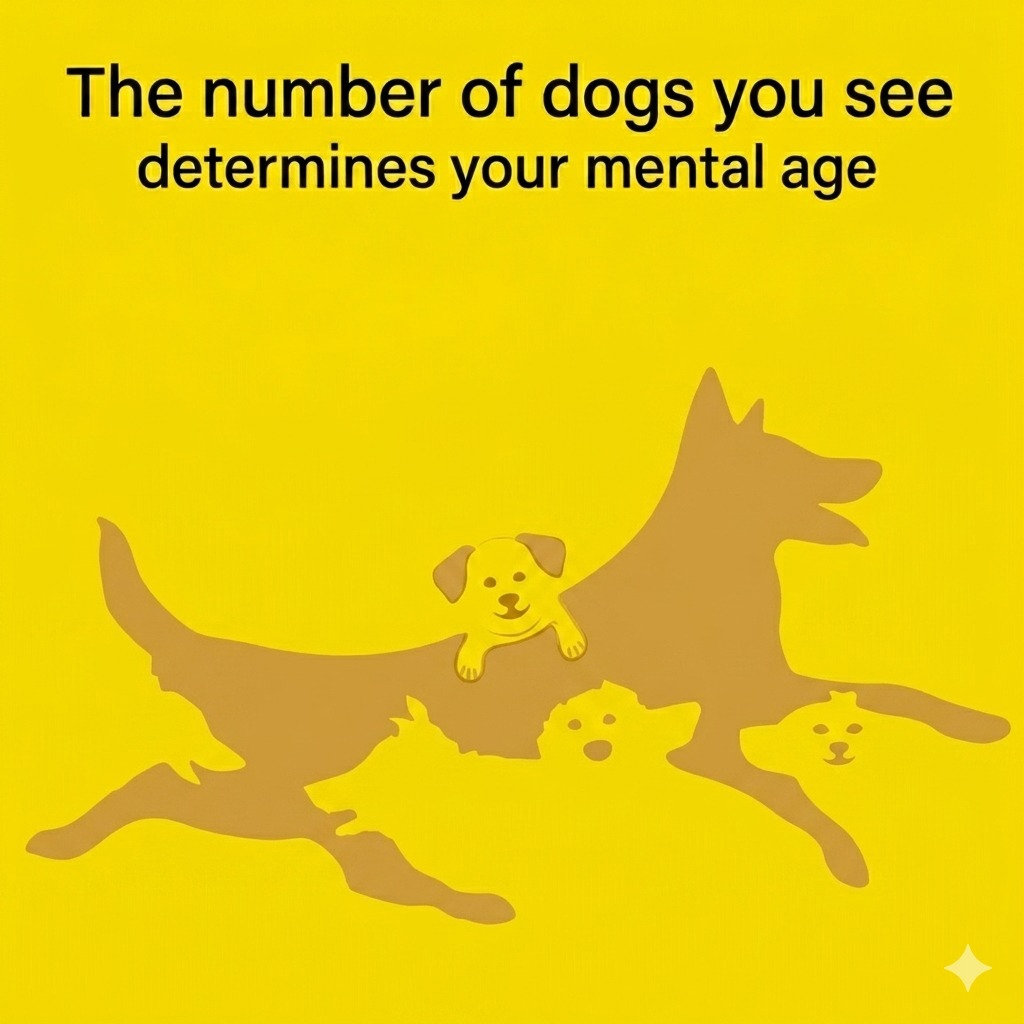
We can only focus on a limited amount of information at once. When you focus on one dog, you might miss another nearby because your attention is "blinded" to other stimuli.
Why it varies: People with higher working memory capacity or better sustained attention may spot more items. This can be improved with practice (like playing video games or doing puzzles).
4. Pareidolia
This is the tendency to perceive meaningful images (like faces or animals) in random patterns. Everyone experiences pareidolia, but some people are more prone to it.
Why it varies: If you're creative or imaginative, you might see dogs in ambiguous shapes. If you're literal-minded, you might only see clear outlines. Both are valid ways of seeing the world.
💡 Pro Tip: Try looking at the image upside down. This disrupts your top-down processing and forces your brain to see shapes anew. You might spot dogs you missed before!
🛠️ How to Use This Puzzle Mindfully
Instead of worrying about your "mental age," use this puzzle as a tool for self-awareness and fun.
For Self-Reflection
Question
What It Might Reveal
"Did I rush or take my time?"
Reflects your current stress level or patience.
"Did I focus on the obvious or hunt for the hidden?"
Reflects your preference for efficiency vs. thoroughness.
"Did I feel frustrated or curious?"
Reflects your relationship with ambiguity and challenge.
For Social Connection
Share with friends: Compare counts and discuss how you found them. Did you scan left-to-right? Did you look for ears first?
Play with kids: Great for developing observation skills and patience.
How Many Dogs Do You See? This Viral Test Claims to Reveal Your Mental Age (Here's What It Actually Means)