4. Remove Deep Stains
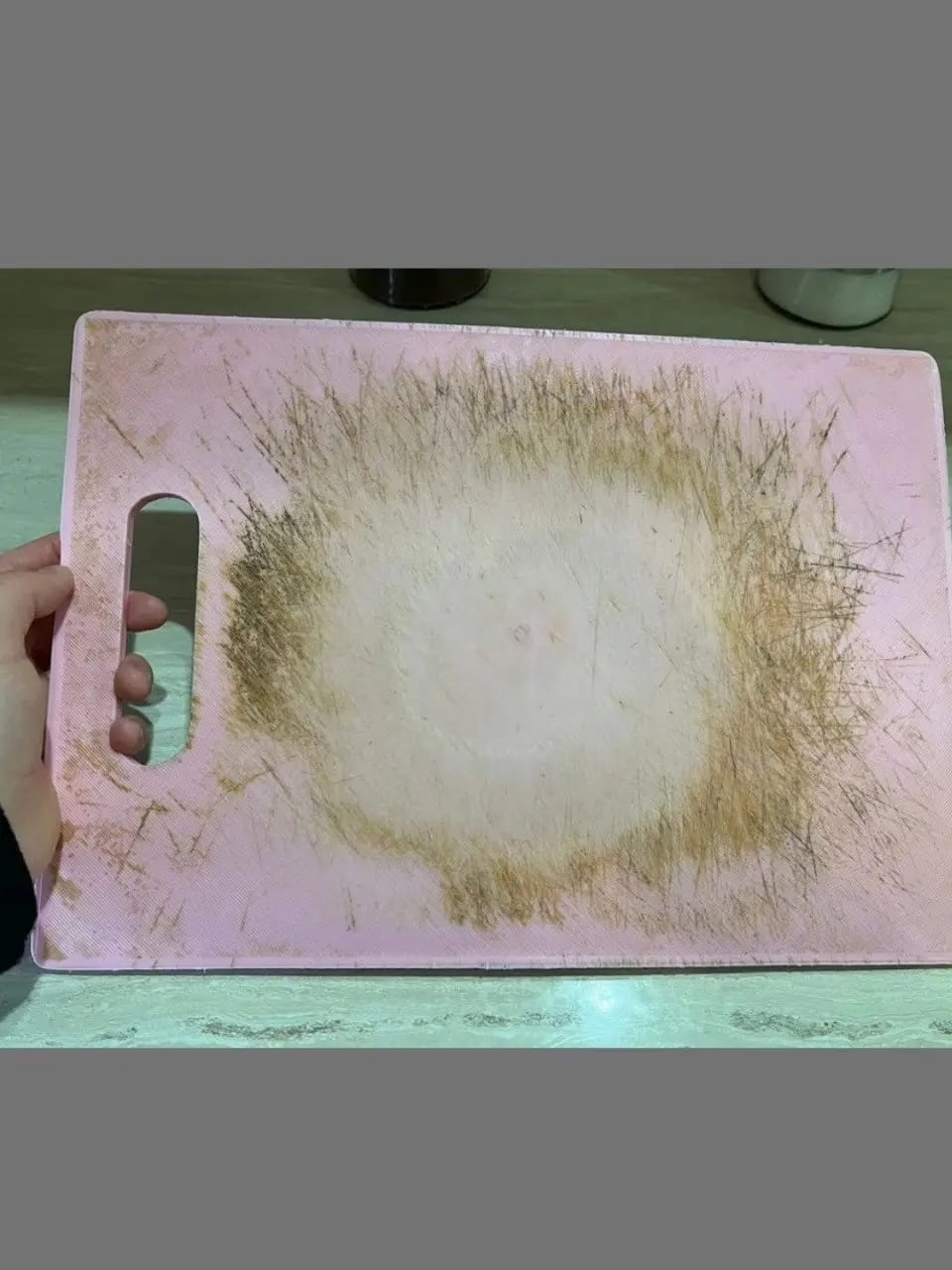
As seen in the image above, cutting boards can develop deep stains over time, particularly from food like tomatoes, curry, or beets. To tackle this issue, create a paste from baking soda and water. Apply the paste to the stains and scrub with a brush. Let the paste sit for a few minutes before rinsing. The abrasive nature of the baking soda will help lift stains without damaging the board.
If you’re dealing with particularly tough discoloration, try rubbing a lemon half over the stains. The acid in the lemon can help lighten the discoloration and also adds a fresh scent to your cutting board.
5. Avoid Cross-Contamination
Plastic cutting boards are prone to deep grooves from knives, and these grooves can trap food particles, leading to potential cross-contamination. To reduce this risk, you can designate specific boards for certain tasks. For example, use one cutting board for raw meats and another for vegetables or bread.
Another good practice is to make sure your knives are sharp. Dull knives cause more damage to the cutting surface and create more grooves where bacteria can accumulate.6. Store Your Cutting Board Properly
Store your plastic cutting board in a clean, dry place when not in use. Avoid leaving it in damp or humid areas, as moisture can promote bacterial growth. If possible, hang your cutting board to allow for airflow, or store it upright, as this helps it dry faster and keeps it from becoming a breeding g