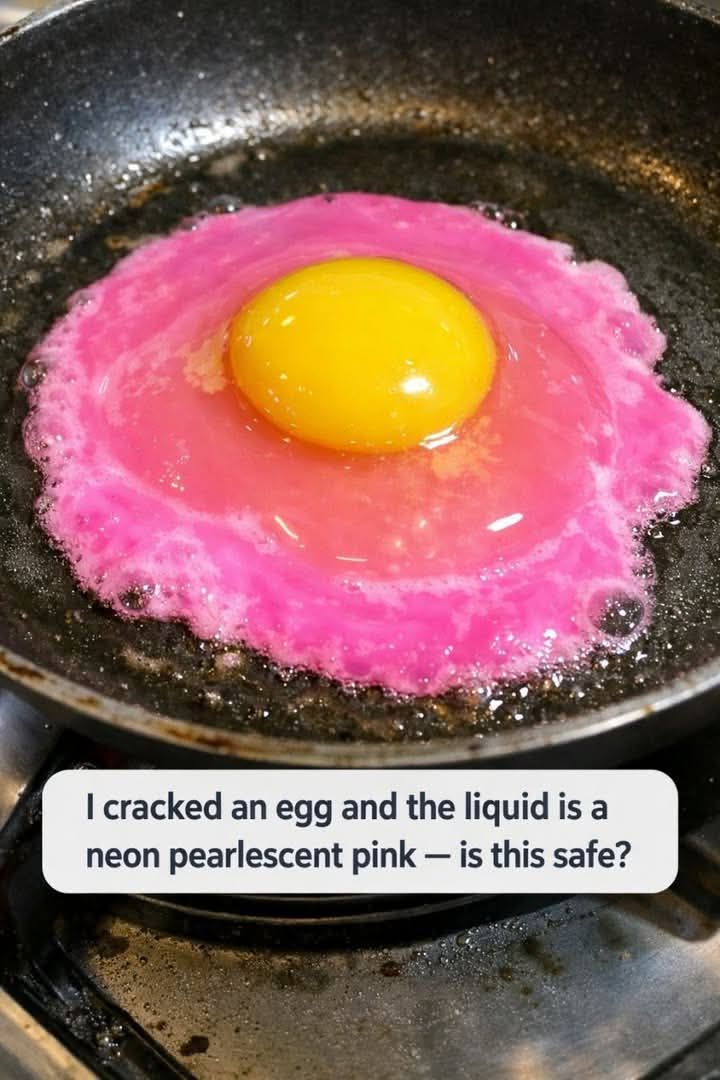
The presence of Pseudomonas in eggs usually indicates that the egg has been exposed to conditions conducive to bacterial growth, such as improper storage temperature or humidity. These bacteria are known for their ability to spoil food rapidly, and their presence in eggs can pose a risk to human health if consumed.
3. Is A Neon Pink Egg Ever Safe To Eat?
In general, a neon pink egg is not considered safe to eat. The unusual color is often a sign of bacterial contamination, specifically by Pseudomonas bacteria, which can produce toxic substances harmful to humans. Consuming such an egg could lead to foodborne illnesses, with symptoms ranging from mild digestive discomfort to more severe conditions.
Even if the egg does not have an off-putting odor or other signs of spoilage, the presence of an unexpected color is enough reason to discard it. When it comes to food safety, it is always better to err on the side of caution and avoid consuming eggs with unusual colors.
4. How To Tell If The Color Is From Bacteria Or Something Harmless
To determine whether the pink color in an egg is due to bacterial contamination or a harmless cause, consider several factors. First, smell the egg—Pseudomonas contamination often results in a sour or rotten odor. If the egg smells off, it is likely spoiled and should be discarded.