Opponents say the problem the bill solves barely exists. The Heritage Foundation's own database shows fewer than 30 cases of non-citizen voting prosecutions nationwide since 2000 out of more than a billion ballots cast.
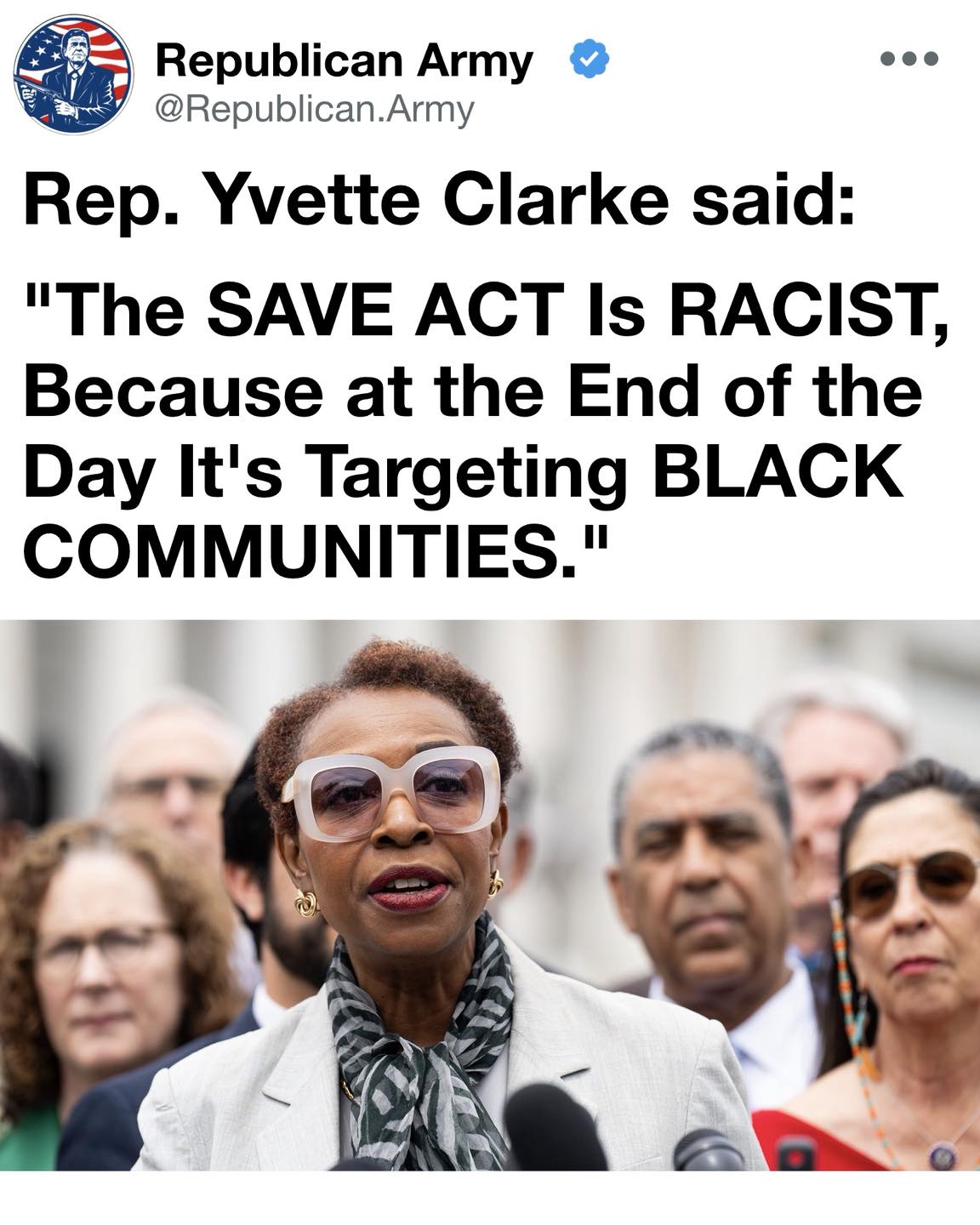
Why Clarke and others call it racist
The argument is not that asking for ID is inherently racist. It is that the burden falls unevenly:
Document access. The Brennan Center estimates 21 million voting-age Americans lack ready access to citizenship documents. Black Americans are three times more likely than white Americans not to have a current passport, and older Black Southerners born under segregation often have birth certificate errors or no hospital record.
In-person requirement. The SAVE Act would end online and mail registration for anyone without a passport — a system that Black organizers used heavily to register voters in Georgia and North Carolina in 2020 and 2024.
History. The National Urban League explicitly compares it to poll taxes and literacy tests: facially neutral rules that in practice disenfranchised Black voters for decades.
Clarke, who represents Brooklyn's majority-Black 9th District, has made this linkage for years in her work on NYPD stop-and-frisk, calling policies that are "neutral on paper but targeting in practice" a form of systemic racism. Her SAVE Act criticism fits that frame.