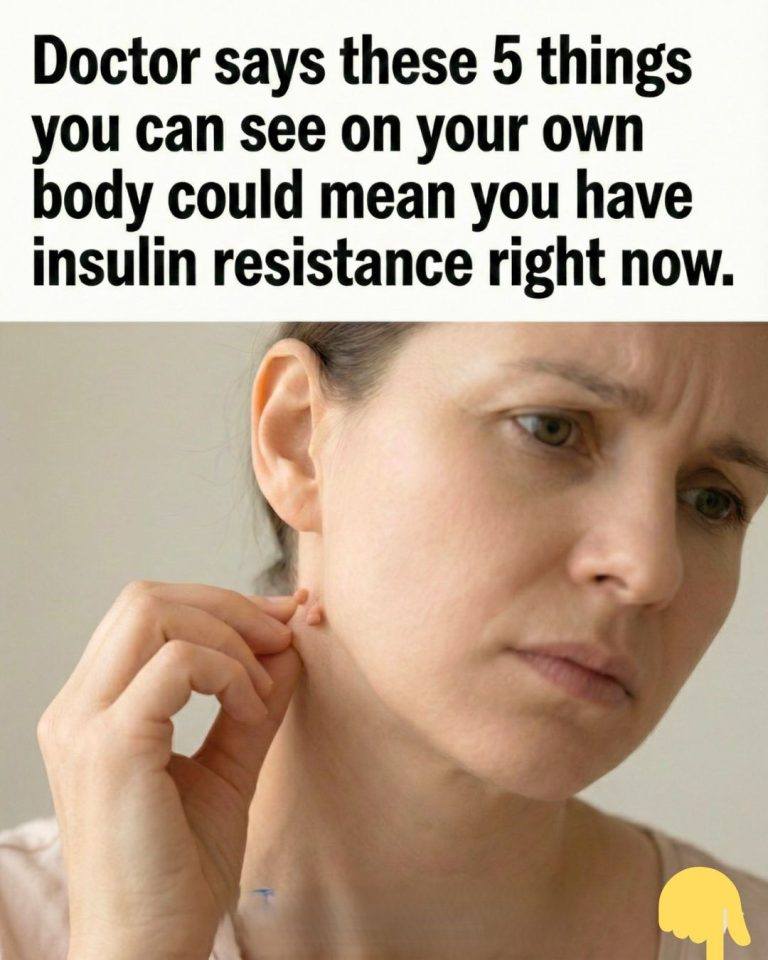
Next, let’s talk about those tiny, fleshy growths that seem to appear out of nowhere – skin tags. People often chalk these up to friction from clothing or jewelry, but recurring clusters, especially in the same spots as acanthosis nigricans, are red flags for insulin resistance.
Unlike moles, skin tags have a small stalk and usually pop up in body folds like the neck, armpits, and groin. Yes, friction may help them form, but the underlying cause is that same relentless insulin-driven growth signal. If you find yourself snipping off skin tags regularly or seeing new ones appear, your body could be crying out for help!
3. Puffiness and Water Retention (Edema)
Have you ever noticed swollen ankles, puffy hands, or even a rounder face than usual? Fluid retention—called edema—isn’t just uncomfortable; it’s another sign of high insulin.
Insulin prompts your kidneys to hold onto more salt, dragging extra water into your bloodstream. Meanwhile, your blood vessels’ inner lining can get damaged, letting fluid leak into surrounding tissues. Want a quick self-check? Press your thumb into your shin for 30 seconds. If a deep dimple remains after lifting your finger, that’s called pitting edema, and it’s a wake-up call that your metabolic health needs attention.
Advertisement
4. Apple-Shaped Body or Sudden Belly Gain
Ever heard of the “apple versus pear” body shapes? When your body starts storing fat disproportionately around your middle—what we call visceral fat—that’s a major warning sign. Women may notice their waistline thickening and losing its hourglass curve, while men often spot a developing “spare tire.”
Why does this happen? As your regular fat stores fill up, excess energy starts getting packed around vital organs, not just beneath the skin. This kind of fat actively sabotages your metabolism, making insulin resistance worse, and can even be life-threatening in the long run.