Psoriasis is an autoimmune disorder that speeds up the life cycle of skin cells, resulting in the rapid buildup of cells on the surface of the skin, forming scales, redness, and inflammation.
The Mayo Clinic describes psoriasis as “a skin disease that causes a rash with itchy, scaly patches, most commonly on the knees, elbows, trunk and scalp.” This is not a rare skin disease but a more common one.
More than 125 million people worldwide, and about 8 million in the U.S. live with the “common, long-term (chronic) disease” that “can be painful, interfere with sleep and make it hard to concentrate.” The condition, after all, has an impact on your health
Though its exact cause is still a mystery, genetics and environmental triggers play a significant role.
The National Psoriasis Foundation (NPF) identifies five types of skin disease, each that comes with a social and emotional toll due to its visible symptoms.
Plaque psoriasis
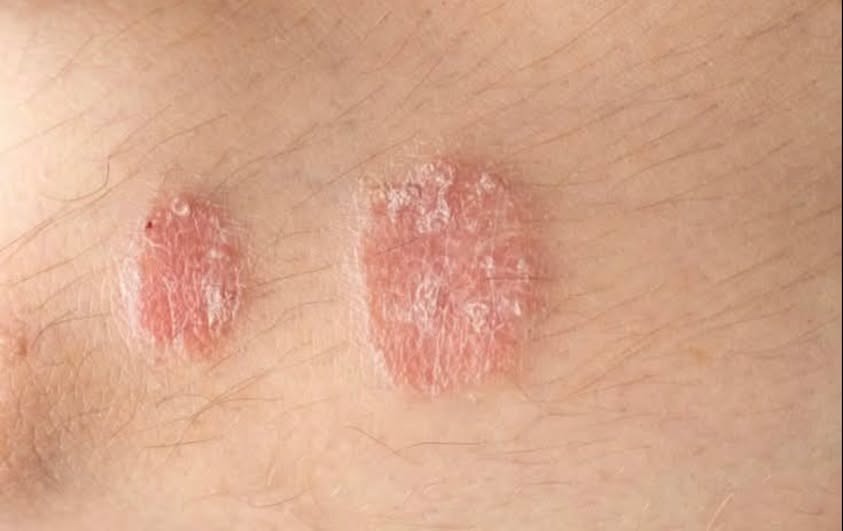
According to the NPF, this is the most common type of psoriasis, characterized by dry, itchy, raised patches of skin (plaques) covered with scales. These patches can vary in number and typically appear on the elbows, knees, lower back, and scalp. The color of the plaques depends on skin tone and may heal with temporary discoloration, known as post-inflammatory hyperpigmentation, especially on darker skin. Any type of irregularity warrants medical attention.
Key characteristics
Texture: Thick and scaly
Color: Red or pink with a silvery overlay