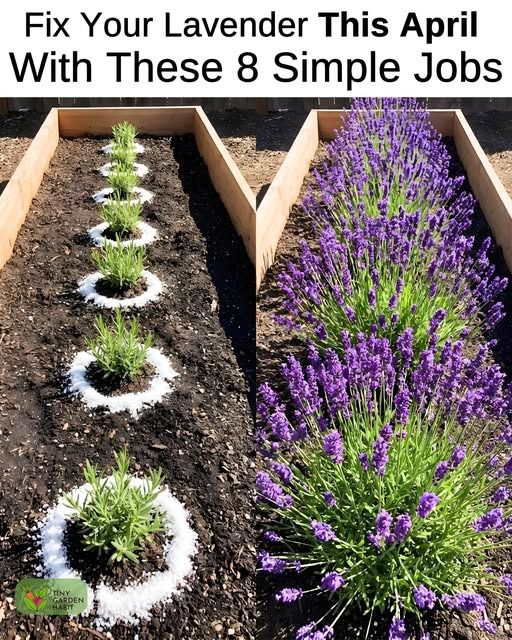
Damp debris creates the perfect miserable environment for fungal problems, and your lavender has no interest in hosting a rot-filled pity party.
A clean surface also helps the soil temperature to rise faster in spring, encouraging new growth as the plant comes out of dormancy.
2: Soil Aeration
lavender soil care
Once the base is clear of winter trash, give the roots a bit of breathing room. I break up soil that has hardened over winter with a hand fork.
This helps water soak in instead of running off and improves airflow around the roots. Compacted soil limits oxygen and can slow down the plant’s ability to put on new growth in spring.
Loosening the soil can also improve drainage and make it easier for roots to expand before the summer heat sets in.
3: Drainage Audit
lavender soil
Even well-aerated soil won’t help if your plant is sitting in waterlogged conditions.
Check for drainage issues and clear any compacted spots, or mix in coarse sand or grit if needed to keep moisture moving. If water sits for too long, roots will rot and die.
In the garden, check the slope of the land. Ideally, you want to see whether water naturally flows away from the base of the plant rather than collect around it.
In case your planting area sits in a low spot, try mounding the soil slightly. Raising the lavender a few inches above the surrounding ground helps excess water drain away more easily.