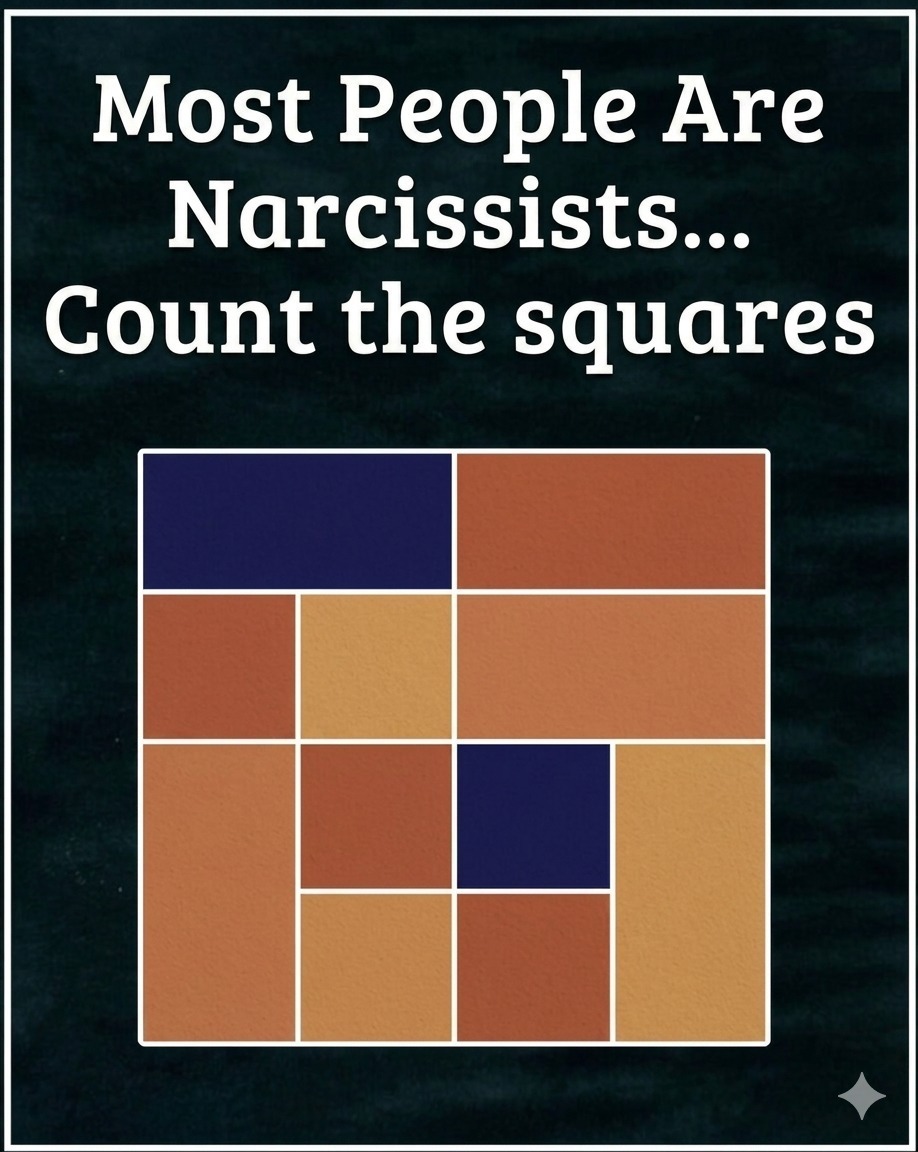
When you first look at a grid, your mind locks onto the most obvious units: the smallest squares. They’re neat, clearly defined, and easy to count. But the puzzle isn’t asking for the smallest squares—it’s asking for all of them.
And that’s where the challenge begins.
Because once you move beyond the obvious, you start noticing something surprising: squares within squares, overlapping structures, and larger shapes formed by combining smaller ones.
The grid hasn’t changed—but your perception of it has.
Breaking Down the Puzzle
Let’s imagine a classic version: a 4x4 grid. That means there are 4 rows and 4 columns of small squares, forming a larger square overall.
If you only count the smallest squares, you get:
4 × 4 = 16 squares
So far, so good.
But now consider this: what about squares that are made by combining four smaller squares?
In a 4x4 grid, you can form 3x3 larger squares of this type. That gives:
3 × 3 = 9 medium squares
Already, we’re at 25.
But we’re not done.
You can also form even larger squares:
2 × 2 of the “double-sized” squares → 4 bigger squares
And finally, 1 large square that encompasses the entire grid
Add them all together:
16 (small)