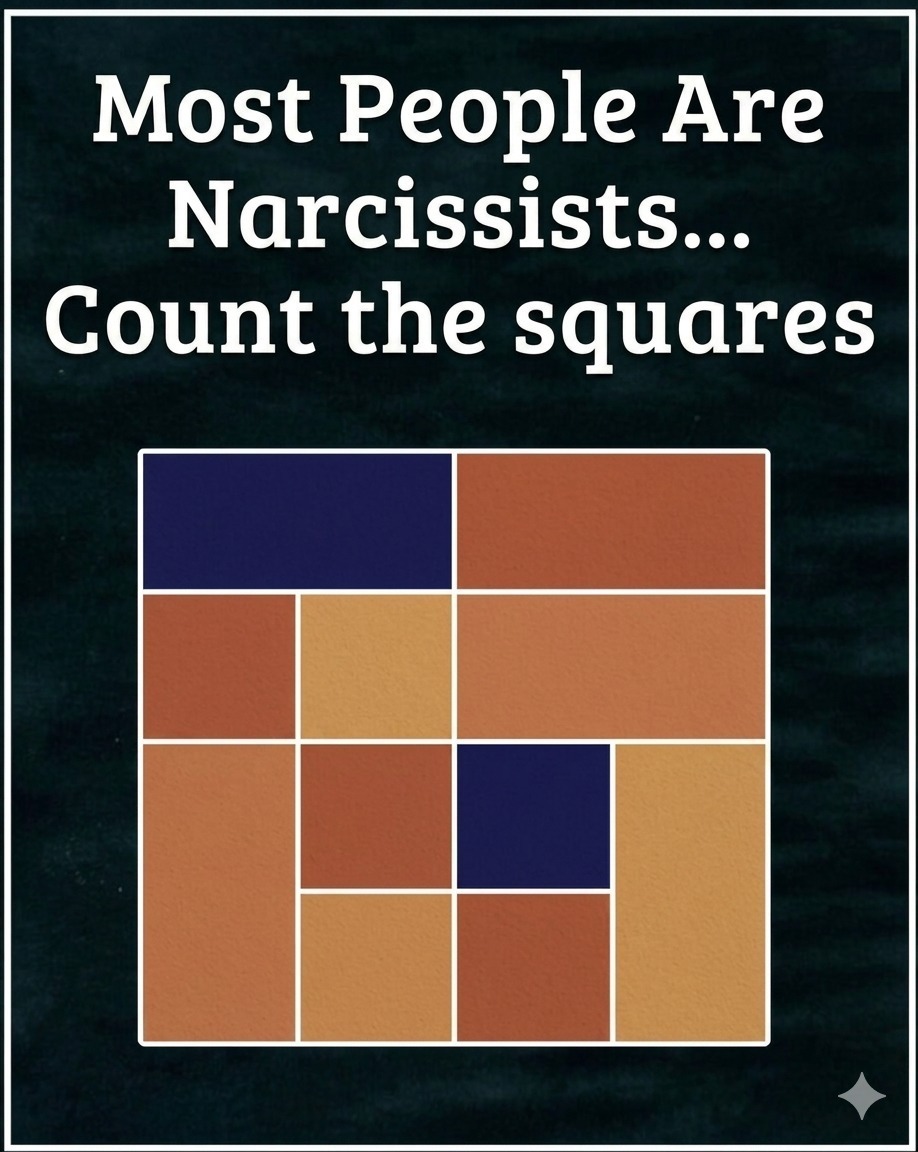
9 (medium)
4 (larger)
1 (largest)
Total: 30 squares
And just like that, the answer nearly doubles from your original guess.
Why We Miss So Many
So why do so many people stop at 16?
It’s not because they can’t count—it’s because they stop looking.
This puzzle highlights a cognitive bias known as premature closure. Once we find an answer that feels correct, we tend to stop searching for alternatives. It’s efficient, but it can also lead us astray.
In everyday life, this bias can show up in subtle ways:
Assuming you understand a problem before exploring all angles
Accepting the first solution without questioning it
Overlooking hidden opportunities because they aren’t immediately visible
The square puzzle turns this abstract tendency into something concrete and visible.
The Moment It Clicks
There’s a particular moment when solving this puzzle that feels almost magical.
You stop seeing the grid as a collection of individual squares and start seeing it as a flexible structure—one that can be grouped, expanded, and reinterpreted.
Suddenly, new squares seem to “appear” out of nowhere.
They were always there, of course. But your brain needed to shift gears to recognize them.
This moment is more than just satisfying—it’s instructive.
It shows that perception isn’t just about what’s in front of us. It’s about how we choose to interpret it.
Variations That Push You Further
Once you’ve mastered the basic 4x4 grid, the puzzle can evolve in countless ways.
Some versions increase the grid size:
5x5, 6x6, or even larger grids dramatically increase the number of possible squares
The counting becomes more complex, often requiring systematic approaches or formulas
Other variations introduce twists:
Missing lines: Some segments are removed, making certain