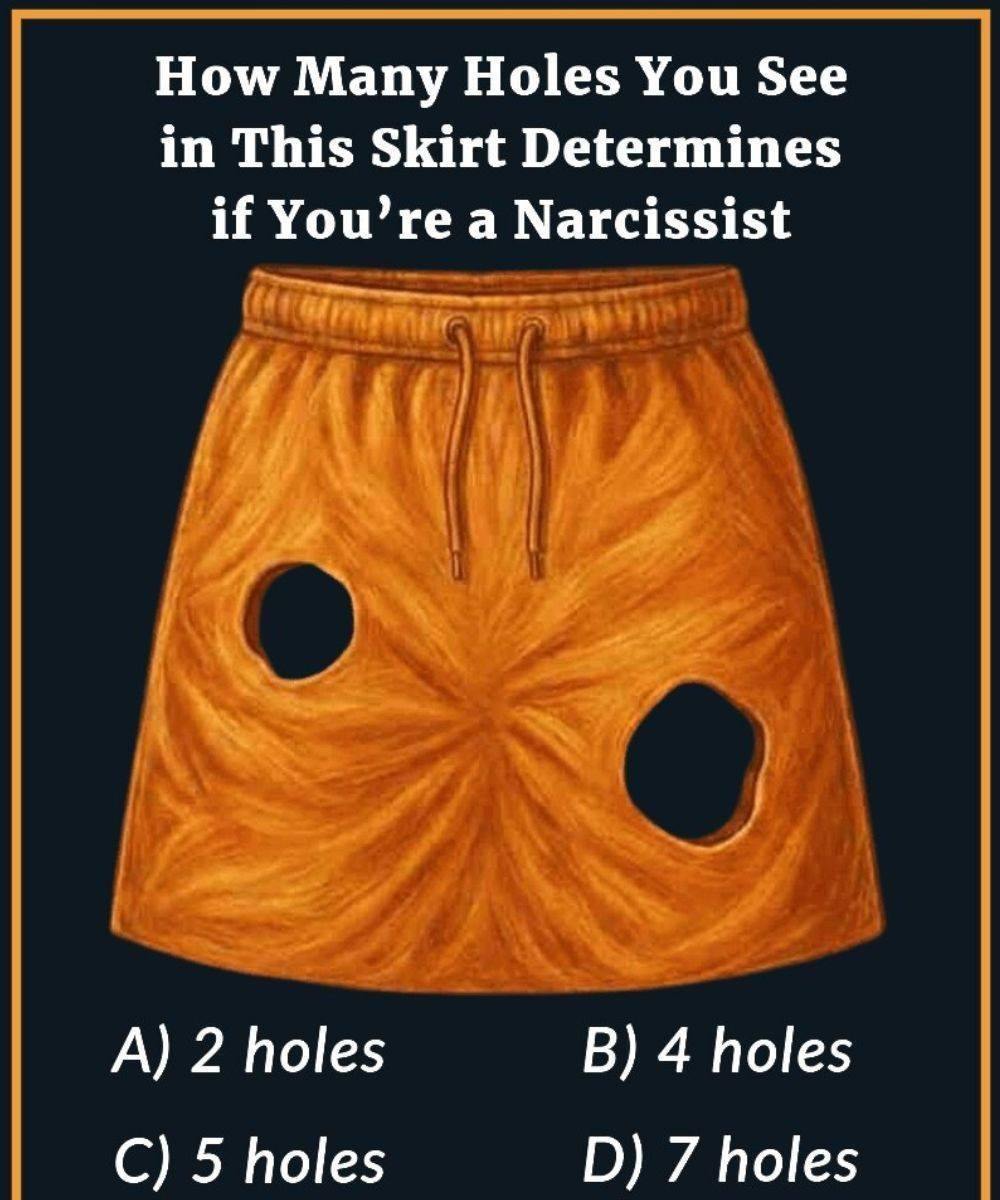
This is studied in Cognitive Psychology, which shows that two people can look at the same image and genuinely perceive different things.
2. Gestalt Principles
Psychologists often refer to Gestalt principles—rules that explain how we organize visual elements. For example:
Closure: We “fill in” missing parts of shapes
Figure-ground: We separate objects from background
Grouping: We cluster similar elements together
These principles influence whether someone counts certain areas as “holes” or not.
3. Optical Illusions
The skirt puzzle functions similarly to classic optical illusions. Your brain tries to interpret ambiguous shapes, sometimes leading to multiple valid interpretations.
The Big Claim: Does This Reveal Narcissism?
Short answer: No, it doesn’t.
There is no scientific evidence linking how many holes you see in an image to narcissism or any personality disorder.
What Is Narcissism, Really?
Narcissism exists on a spectrum. At its extreme, it may be diagnosed as Narcissistic Personality Disorder, defined by mental health professionals as a condition involving:
Grandiose sense of self-importance
Need for excessive admiration
Lack of empathy
Exploitative behavior in relationships