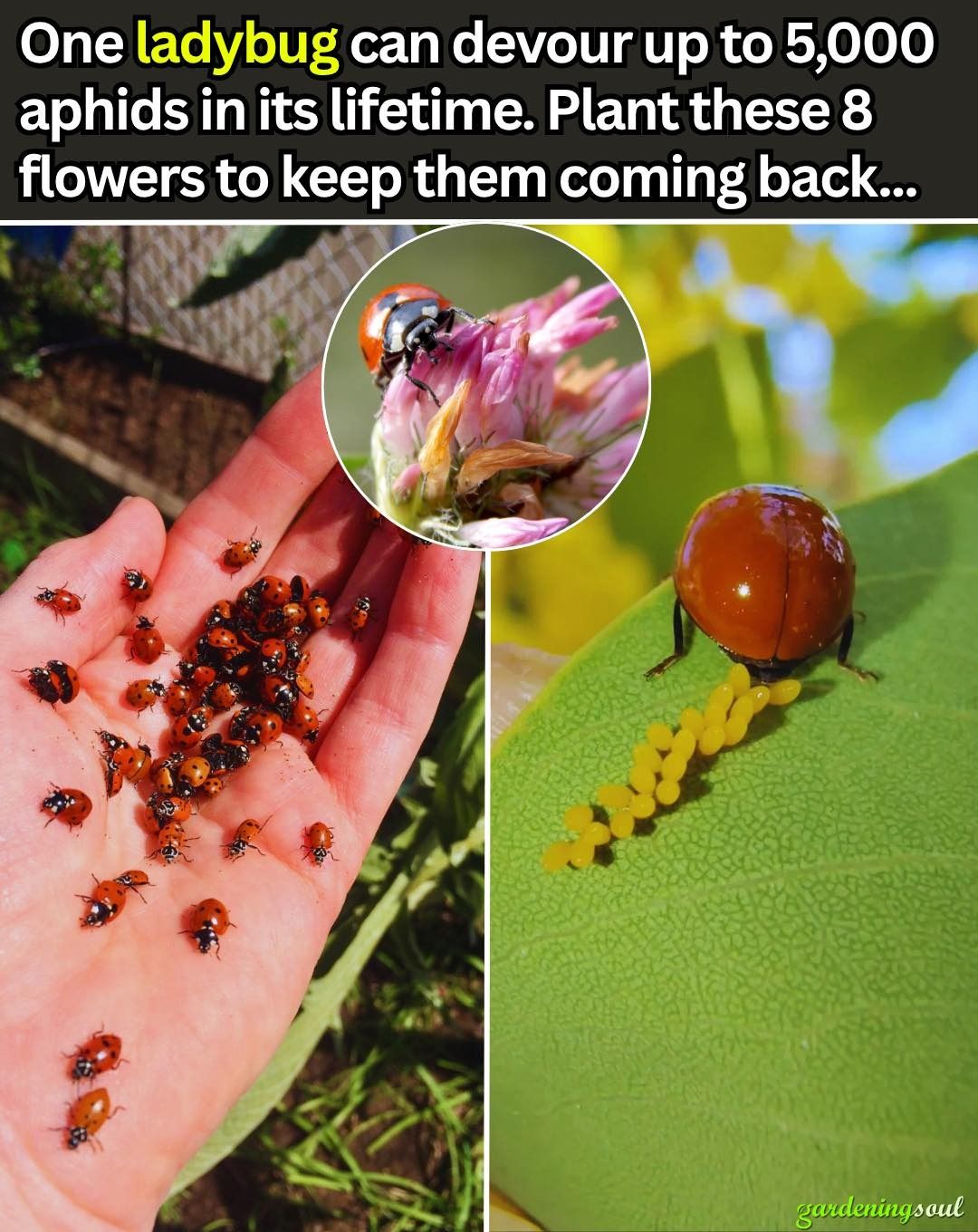
In the delicate theater of the organic garden, there is no protagonist more beloved or more efficient than the ladybug.
While they may look like delicate, polka-dotted gems crawling across a leaf, ladybugs – specifically the Convergent Lady Beetle (Hippodamia convergens) – are among the most voracious apex predators in the insect world.
If you have ever struggled with an aphid infestation that turned your lush rosebushes into sticky, shriveled messes, you know the frustration of “pest pressure.”
Most gardeners reach for a bottle of insecticidal soap or, worse, a synthetic pesticide. However, these chemical “solutions” often kill the beneficial insects along with the pests, creating a biological vacuum that leads to even worse outbreaks later.
The secret to a self-sustaining, pest-free garden isn’t a chemical – it’s a biological army. A single ladybug can devour up to 5,000 aphids in its lifetime.
The Biology of a Predator: Why Ladybugs are Essential
To understand why ladybugs are so effective, we must look at their lifecycle. Most people recognize the adult beetle, but the real “aphid-eating machines” are the larvae.
The Larvae Phase: The “Alligator” of the Garden
Ladybug larvae look nothing like the adults. They resemble tiny, black-and-orange armored alligators. They are extremely active and significantly more aggressive than the adults.