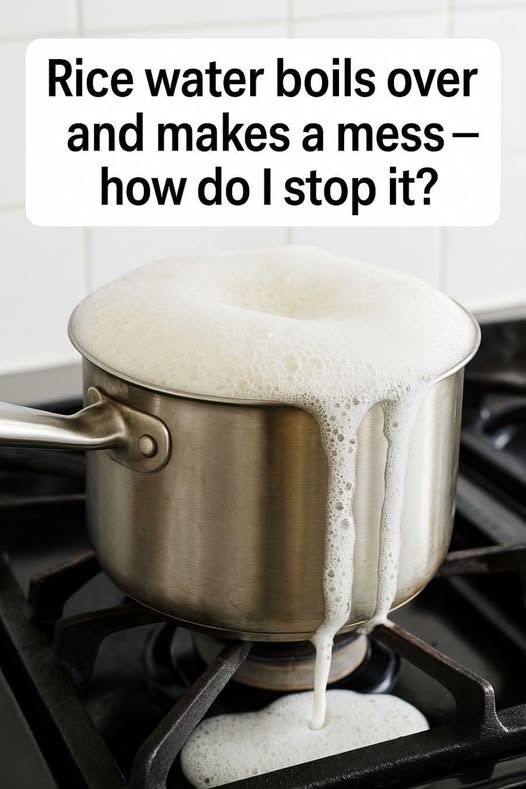
Adding a small amount of oil or butter to the cooking water can help reduce foaming. The fat interacts with the starch, breaking down the bubbles and preventing them from rising too high.
A teaspoon of oil or a small knob of butter is usually sufficient for this purpose. Not only does this trick help control foam, but it can also add a subtle richness to the cooked rice.
9. Try the Viral Wooden Spoon Hack — and Its Limits
One popular kitchen hack is placing a wooden spoon across the top of the pot to prevent boil-overs. The theory is that the spoon breaks the surface tension and pops the bubbles before they spill over.
While this method can be somewhat effective, its success largely depends on the pot size and cooking temperature. It is not foolproof, so it’s best used in conjunction with other preventative measures.
10. Microwave and Rice Cooker Methods That Don’t Boil Over
Using a microwave or rice cooker can be a hands-off way to avoid boil-overs entirely. Rice cookers are designed to manage temperature and steam, preventing spills by automatically adjusting the heat.
For microwave cooking, use a microwave-safe bowl with a loose-fitting lid or microwave-safe plastic wrap. Cook on a medium setting and check frequently to ensure the rice is cooking evenly. These methods can save time and effort, especially for those who regularly cook rice.
11. Clean-Up Hacks for When the Starch Foam Wins Anyway
If your rice does boil over, quick clean-up can save you a lot of hassle. Start by turning off the heat and carefully lifting the pot to avoid burns. Use a damp cloth or sponge to wipe up the spill immediately, as dried-on starch can be tough to remove.