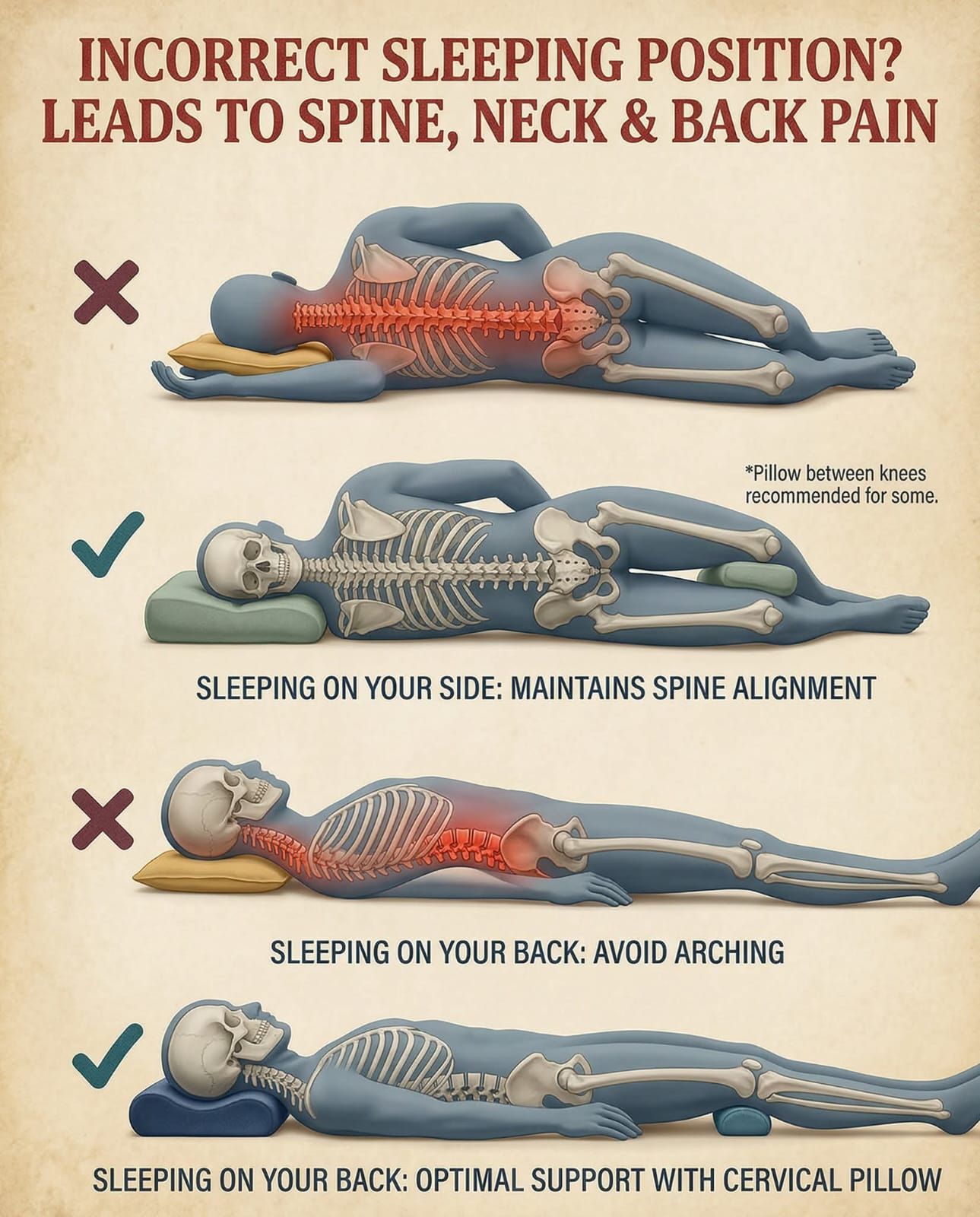
Worsening sleep apnea: Sleeping on your back tends to worsen obstructive sleep apnea (OSA). When you lie supine, your airway is more likely to collapse, increasing apnea episodes, intermittent drops in oxygen levels, and surges in blood pressure — all risk factors tied to stroke. (PubMed Central)
Positional influence after stroke: In studies of stroke patients, many tend to spend the majority of their sleep time lying on their backs (supine) in the acute phase. This may exacerbate apnea burden and impact recovery. (PubMed Central)
Mechanical risks with neck rotation: In rare case reports, sleeping in a prone position with extreme neck rotation has been implicated in compressing vertebral arteries, causing strokes in the posterior circulation (so-called “bow-hunter’s stroke”). (ScienceDirect)
While these findings don’t prove that supine sleep causes strokes directly, they point to mechanisms and associations worth considering — especially for seniors with other vascular risk factors.
Balancing the Evidence: What the Research Doesn’t Show
It’s important to keep perspective:
Most studies are observational, meaning they show associations — not definitive cause and effect.
Many findings focus more on sleep duration, fragmentation, or breathing disorders than on posture alone. (PubMed Central)
What’s “risky” for one person may not be for another, depending on age, health status, neck/spine anatomy, and existing vascular disease.
Some older adults simply find certain positions more comfortable (or only tolerable) due to other health issues (arthritis, back pain, respiratory problems, etc.).
So rather than prescribing a single “perfect” position, the goal is to adopt safer habits suited to your body and risks.
Safer Sleep Tips for Seniors — Protecting Brain & Blood Flow