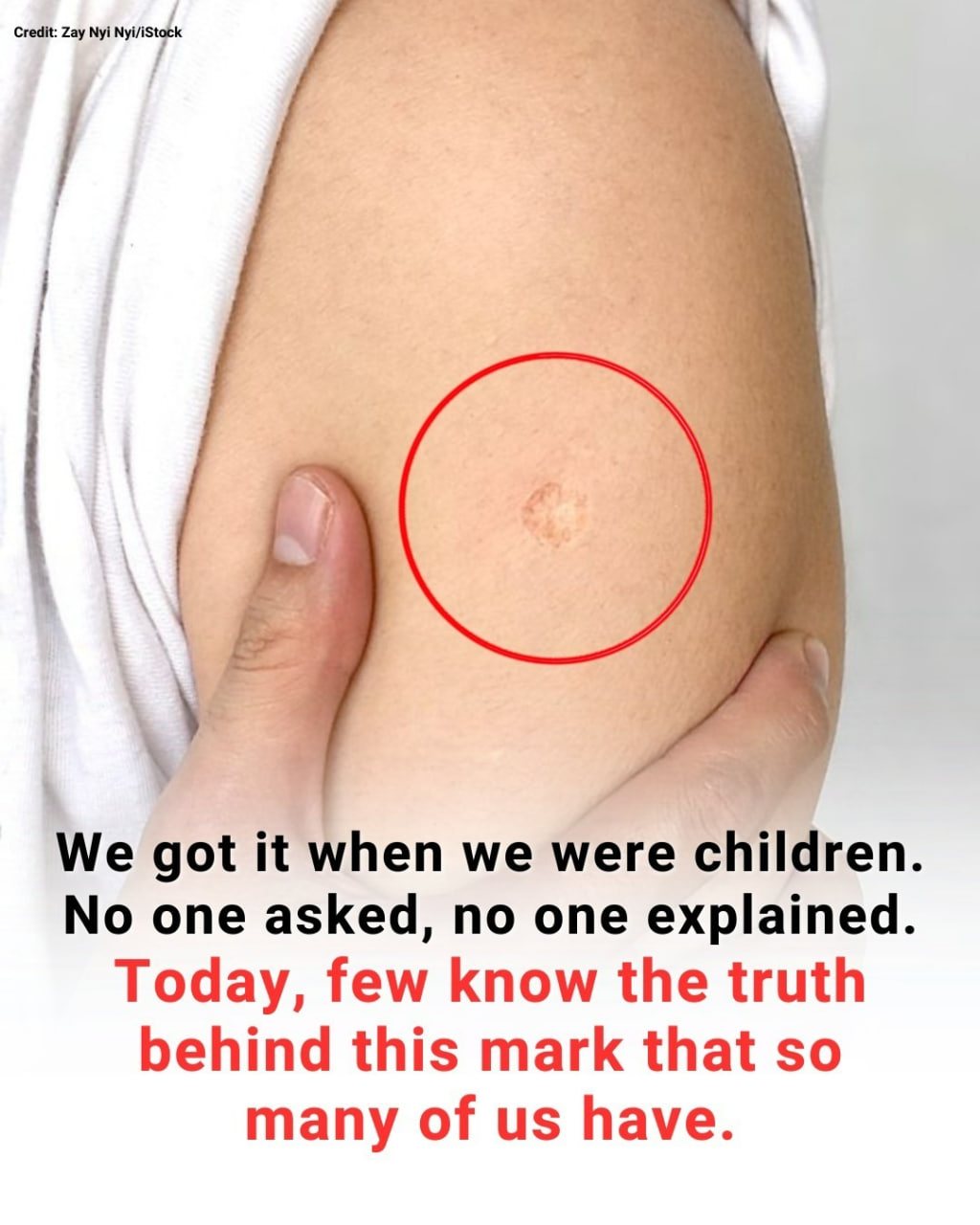
BCG is different. It’s injected into the skin itself (intradermal), creating a small wheal (a raised bump). Over the next few weeks, that bump becomes a pustule, then ulcers, then finally heals into a scar.
This reaction is intentional. It’s a sign that the immune system has responded to the vaccine. A BCG shot that doesn’t leave a scar may not have been effective.
That scar isn’t a complication. It’s proof that the vaccine worked.
Misconception #4: “I must have injured myself as a child and forgotten.”
The truth: This is a common explanation people invent when they don’t know about the vaccine.
It makes sense—most childhood injuries leave some mark, and we forget many of them. But the BCG scar has a distinctive appearance and location that sets it apart:
Location: Always on the left or right upper arm (deltoid area)
Appearance: Round, uniform, slightly depressed
Consistency: Nearly identical in size and shape across millions of people
If you have a scar that matches this description, it’s almost certainly from BCG vaccination—not a fall, a burn, or a scrape you’ve forgotten.
Misconception #5: “It’s a brand or tribal mark.”